How Smart Dash Cams Are Changing Driver Safety
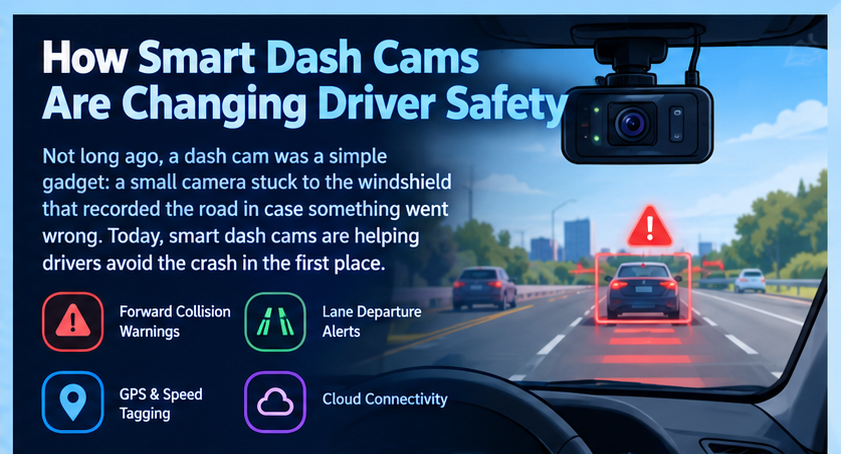
Not long ago, a dash cam was a simple gadget: a small camera stuck to the windshield that recorded the road in case something went wrong. Its main job was to settle arguments after a crash. Today, smart dash cams are doing something much more valuable. They are helping drivers avoid the crash in the first place.
With AI-powered alerts, driver monitoring, GPS, and cloud connectivity, the modern dash cam has become an active driver safety tool for everyday commuters, parents of new drivers, and fleet managers alike.
Key Takeaways
- Smart dash cams have shifted from recording evidence after an incident to warning drivers before one.
- Driver-facing cameras can flag distraction and drowsiness, two of the most common causes of preventable crashes.
- Recorded footage and driving data turn vague opinions about a driver's habits into concrete feedback.
- Privacy, consent, and local laws matter, especially when cameras record other people.
1. From Passive Recorder to Active Safety Assistant
Traditional dash cams loop-record video and save a clip when a sensor detects a sudden impact. That is still useful, but it only helps once the damage is done. Smart dash cams add a layer of processing that analyzes the road and the driver in real time. Common features now include:
- Forward Collision Warnings: Alerts when you are closing in on the vehicle ahead too quickly.
- Lane Departure Alerts: A prompt when the car drifts out of its lane without a signal.
- Speed and Location Tagging: GPS data attached to footage, so context like speed and route is not left to memory.
- Automatic Incident Detection: Built-in motion sensors that lock and save footage around hard braking, sharp swerves, or impacts.
These alerts will not replace an attentive driver, but a half-second warning at the right moment can make a real difference.
2. Watching the Driver, Not Just the Road
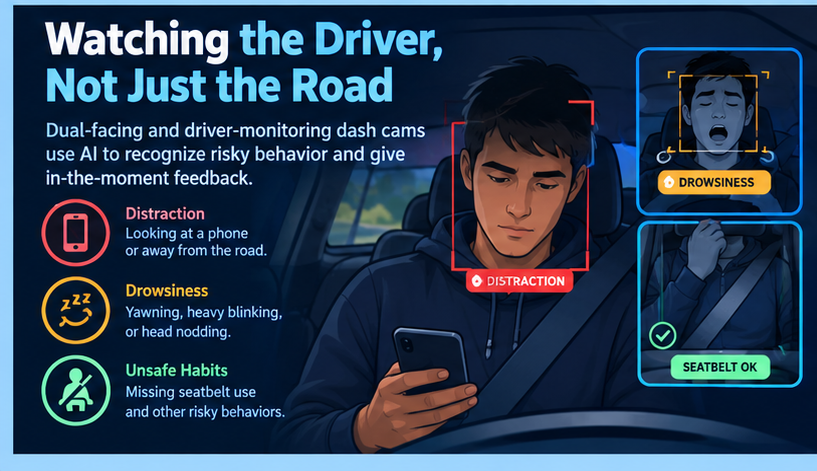
One of the biggest shifts is the rise of dual-facing and driver-monitoring dash cams. Instead of only filming traffic, these units also look at the cabin. Using AI, they can recognize patterns linked to risky behavior, such as:
- Distraction: Looking down at a phone or away from the road for too long.
- Drowsiness: Repeated yawning, heavy blinking, or a head nodding forward.
- Unsafe Habits: Missing seatbelt use or other behaviors that raise risk.
Because distraction and fatigue are such common contributors to crashes, in-the-moment feedback on these behaviors is one of the most promising uses of the technology.
3. Better Evidence, Faster Answers
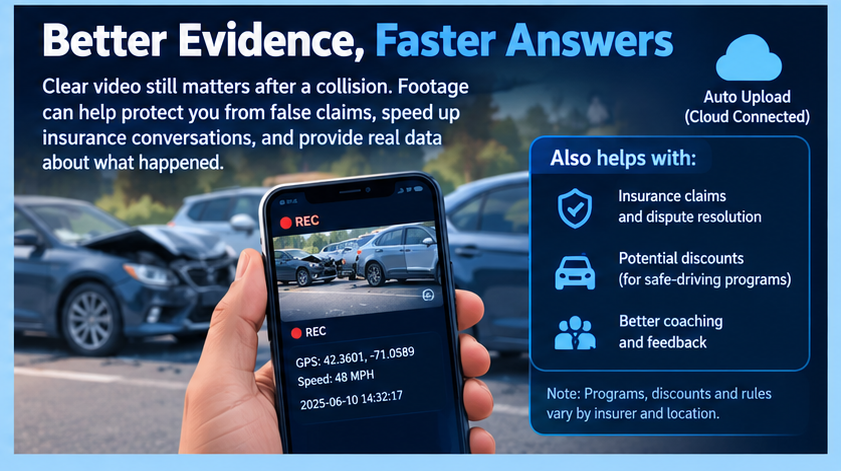
Clear video still matters a great deal after a collision. Footage can help show what actually happened, protect a driver from a false claim, and speed up conversations with insurers. Cloud-connected models can even upload clips automatically, so the evidence survives if the camera or its memory card is damaged.
Some insurers also offer programs or discounts tied to safe-driving data, though availability and rules vary by provider and location, so it is worth asking your own insurer what they accept.
4. A New Tool for Coaching New and Teen Drivers
For parents, the hardest part of teen driving is the lack of visibility. You cannot ride along on every trip, and asking "how did the drive go?" rarely gets a detailed answer. Smart dash cams and driving-data tools can make coaching conversations more productive:
- Specific Examples: Reviewing a moment of hard braking or tailgating is more effective than a general lecture.
- Positive Reinforcement: Data also shows when a new driver is improving, which is worth celebrating.
- Shared Expectations: When teens know how the system works and why, it works best as a teaching aid rather than a surveillance tool.
Driving schools and instructors can use the same approach to give students clearer feedback between lessons.
5. Fleets and Professional Drivers
Businesses were among the first to adopt smart dash cams at scale. Fleet managers use video telematics to identify risky patterns across many vehicles, coach drivers with real examples, and recognize those who drive safely. The goal is not just fewer claims, but a stronger safety culture where feedback is routine rather than reserved for after something goes wrong.
6. Privacy, Consent, and Responsible Use
With more cameras on the road comes a need for responsible use. Before installing a smart dash cam, keep these points in mind:
- Know Your Local Laws: Rules differ on where a camera can be mounted and on recording audio or people inside the vehicle. Check the requirements for your state or country.
- Be Transparent: If passengers, employees, or family members will be recorded, tell them. Written policies are good practice for fleets.
- Protect the Footage: Choose products with secure storage and clear data policies, and avoid posting footage that identifies other people without a good reason.
7. Where Smart Dash Cams Fit in the Bigger Safety Picture
A dash cam shows what happened. To understand why a driver is at risk, and how that risk changes with conditions like time of day, weather, and road type, you need to look at the bigger picture. That is where risk assessment tools come in. Combined with the awareness and feedback that smart cameras provide, they help drivers and families make better decisions before they get behind the wheel.
Want to understand your driving risk before you hit the road?
Savfer helps drivers, families, and driving programs assess risk and build safer habits with clear, data-backed insights.
Get in Touch with Savfer